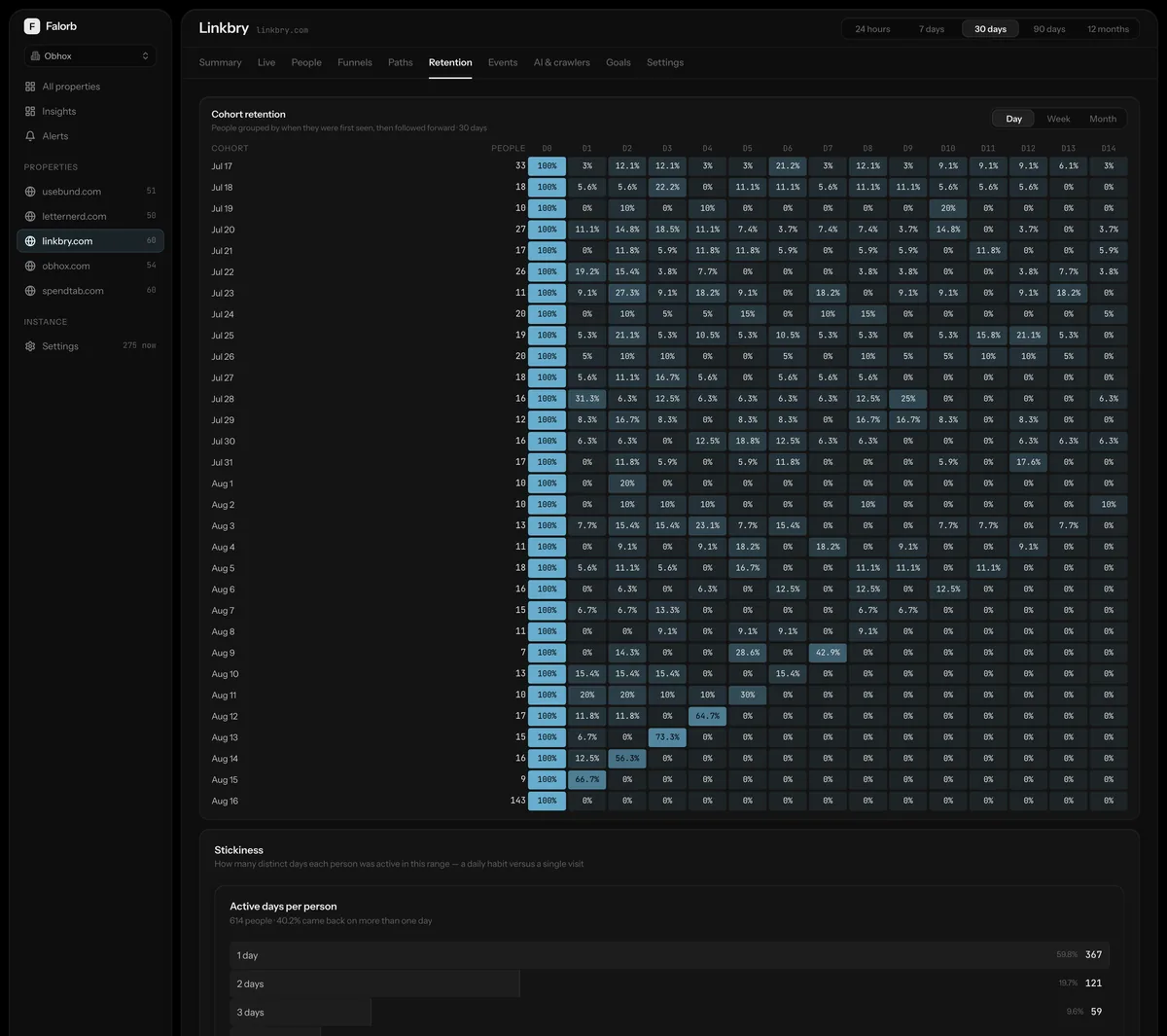
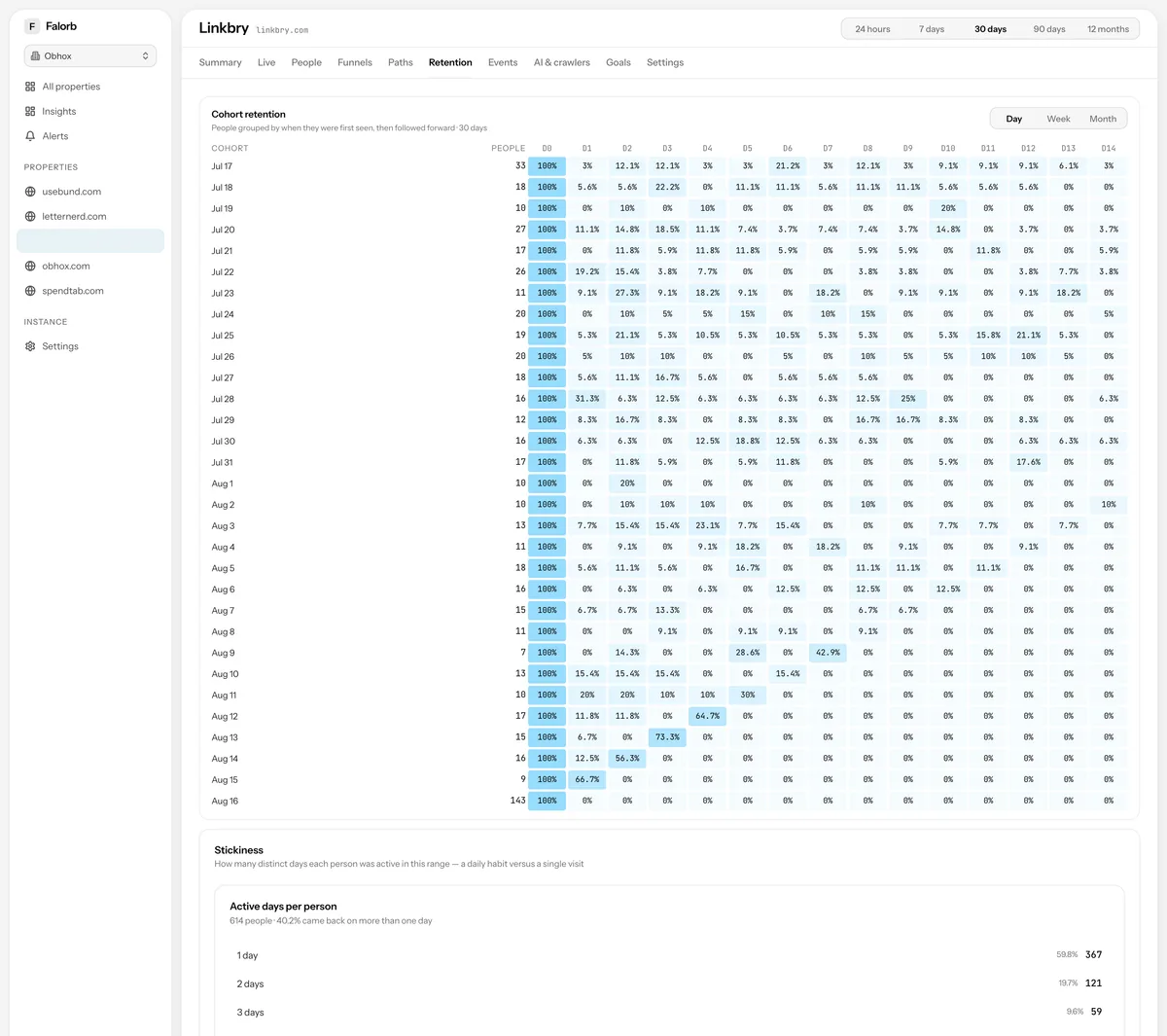
Cohorts by day, week or month
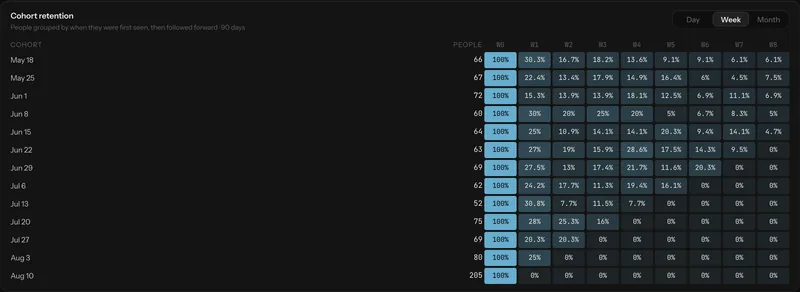
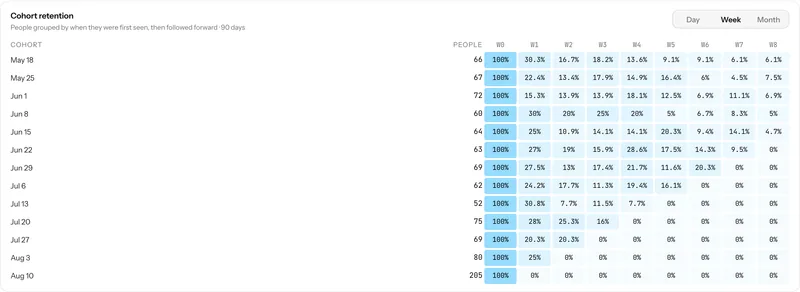
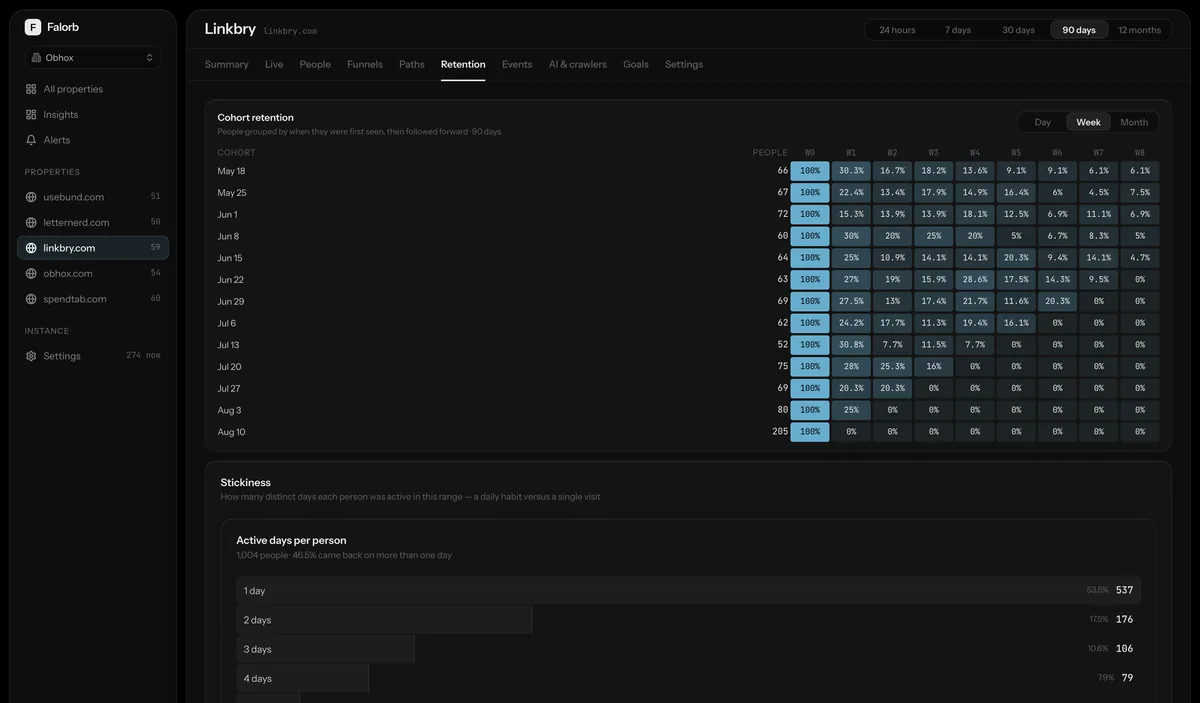
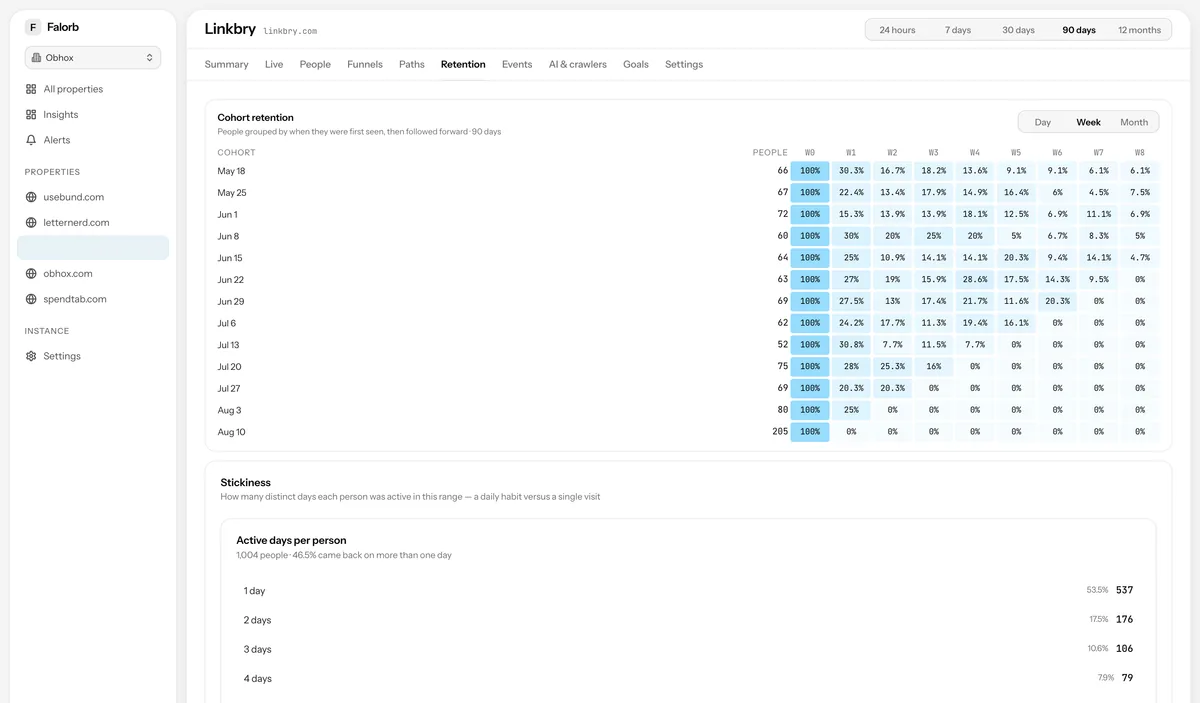
Each row is the group of people first seen in a period; each column is how many of them came back later. Daily cohorts for a product with a daily rhythm, monthly for a business with a long one. The grid re-computes rather than approximating one from the other.
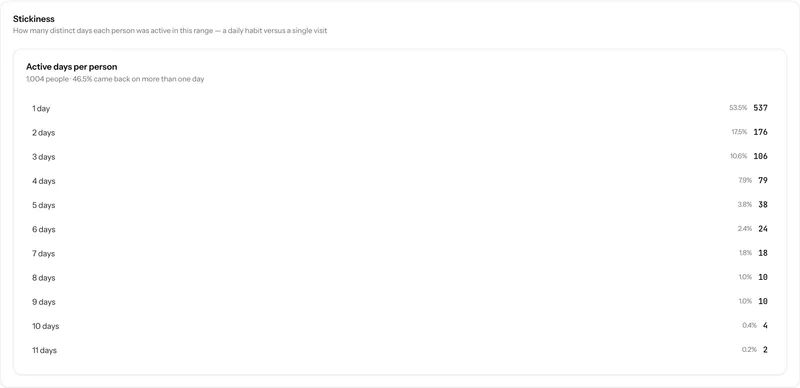
Stickiness
How many distinct days in the period a person was active, as a distribution rather than a single ratio. One number cannot distinguish a product used once a month by everybody from one used daily by a tenth of them, and those are opposite businesses.

Longer windows, same query
Switching to weekly cohorts over ninety days is a control on the page, not a different report. The underlying data is a per-person daily rollup maintained as a materialised view, so a twelve-month grid is not a twelve-month scan.
How it works, precisely
- Cohort periods
- Day, week or month
- Input
- A person-day materialised view maintained on write
- Today
- Included. The current day is not silently excluded from the grid
Retention: the usual questions
Does retention count anonymous visitors?
Yes, over resolved person identities. An anonymous visitor on a stable device is a person; if they later identify themselves, the merge re-attributes their earlier activity, and the cohort they belong to follows the resolution.
Next, most people read
Run it yourself this afternoon
Clone the repository, bring up the stack with Docker Compose, paste one script tag. The data never leaves your machines.