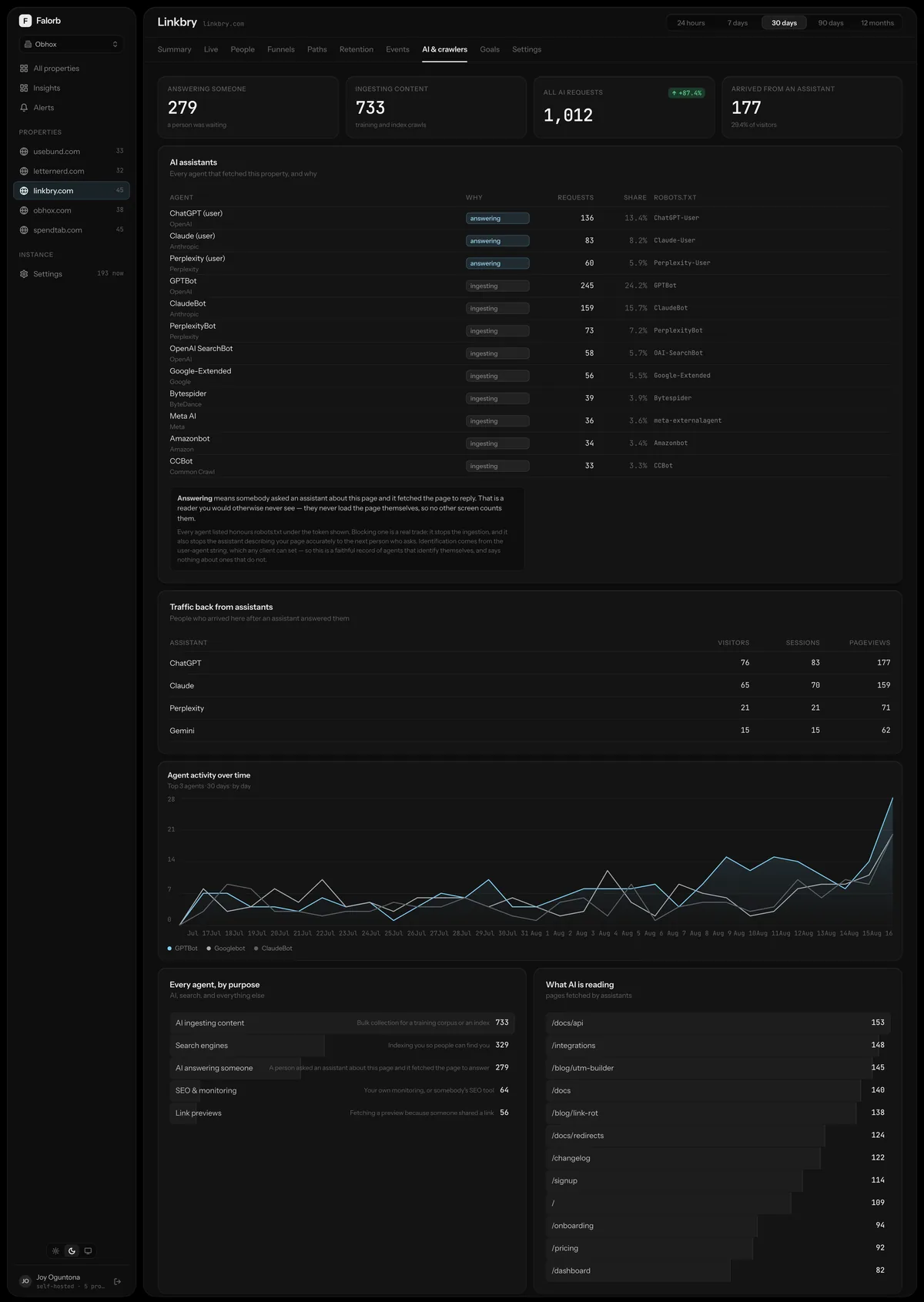
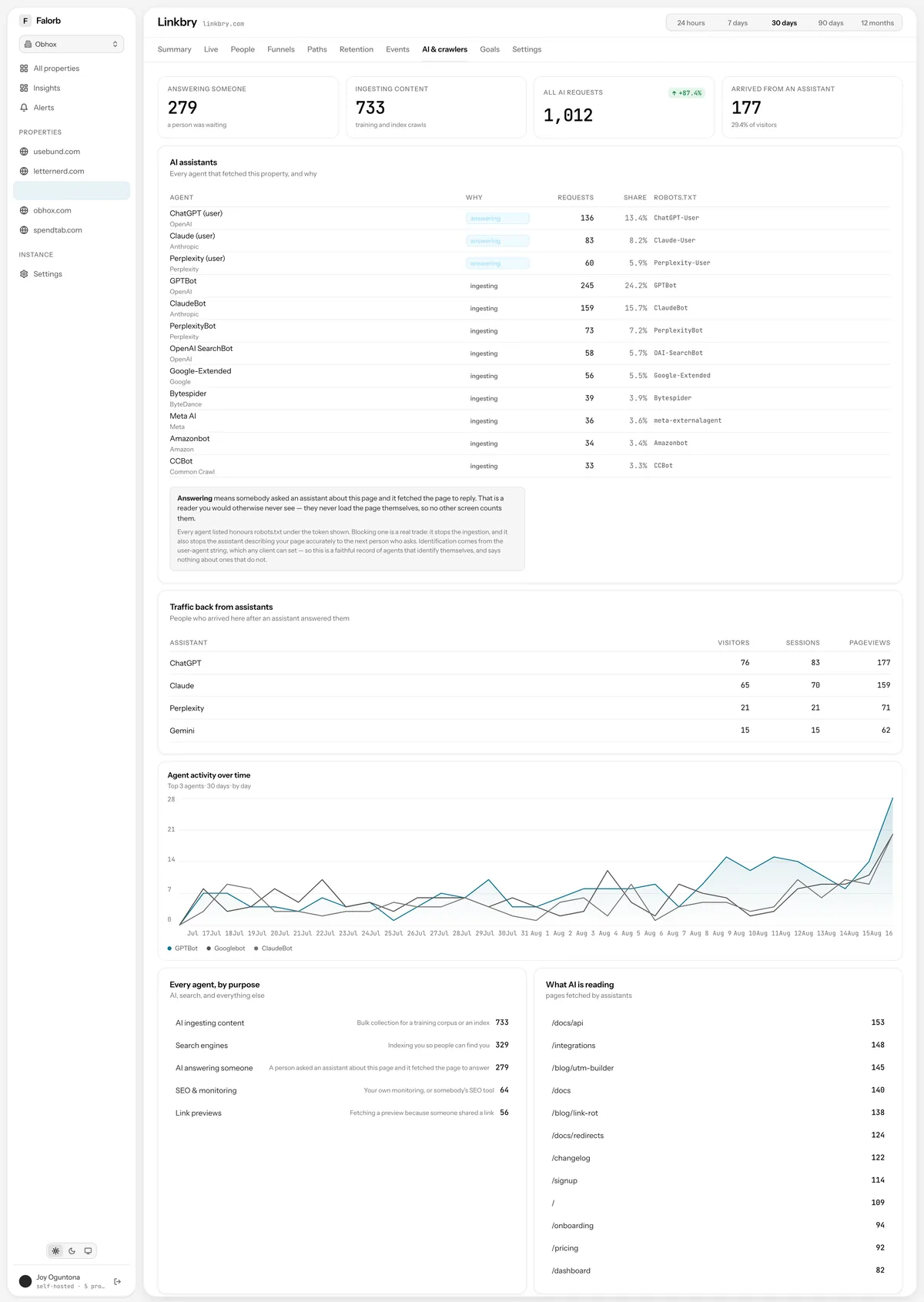
Answering is not ingesting
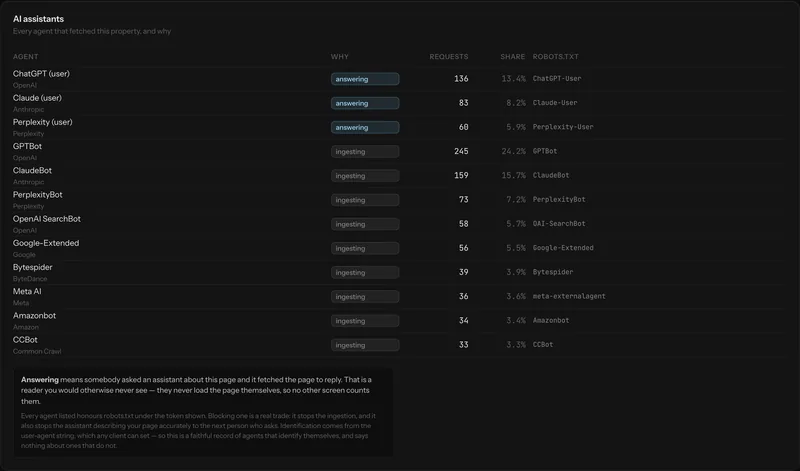
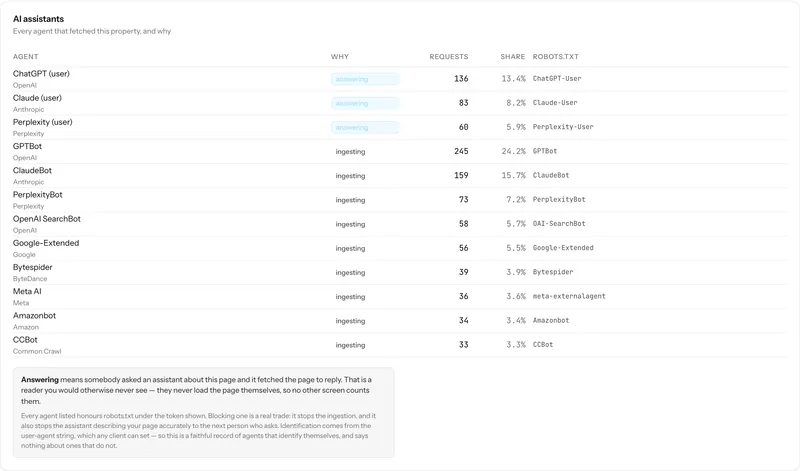
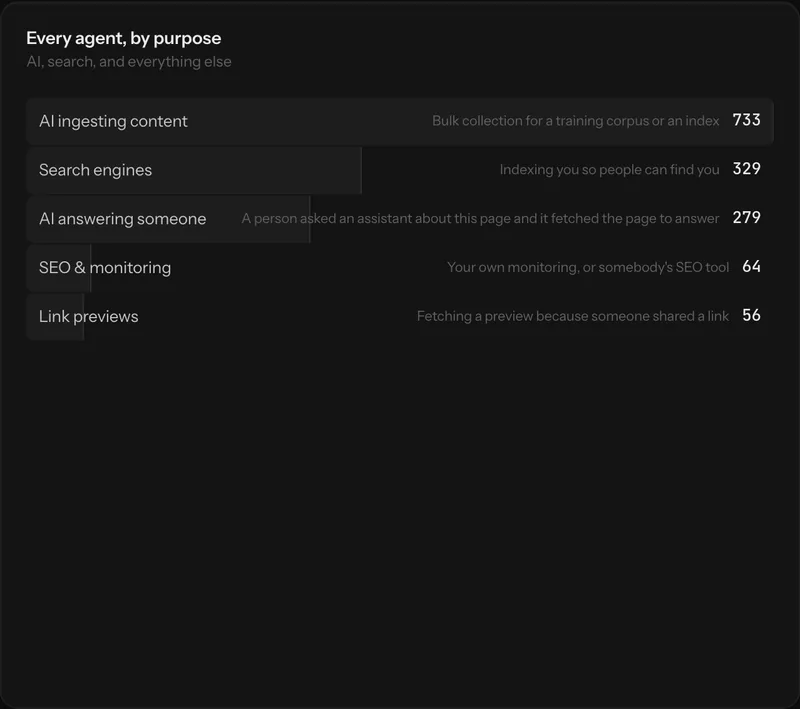
ChatGPT-User means a person asked a question and is waiting for the answer; GPTBot means a corpus crawl. Classifiers that treat both as one agent lose the more valuable of the two. Every agent is listed with its vendor, request volume, share and the exact robots.txt token that would block it.
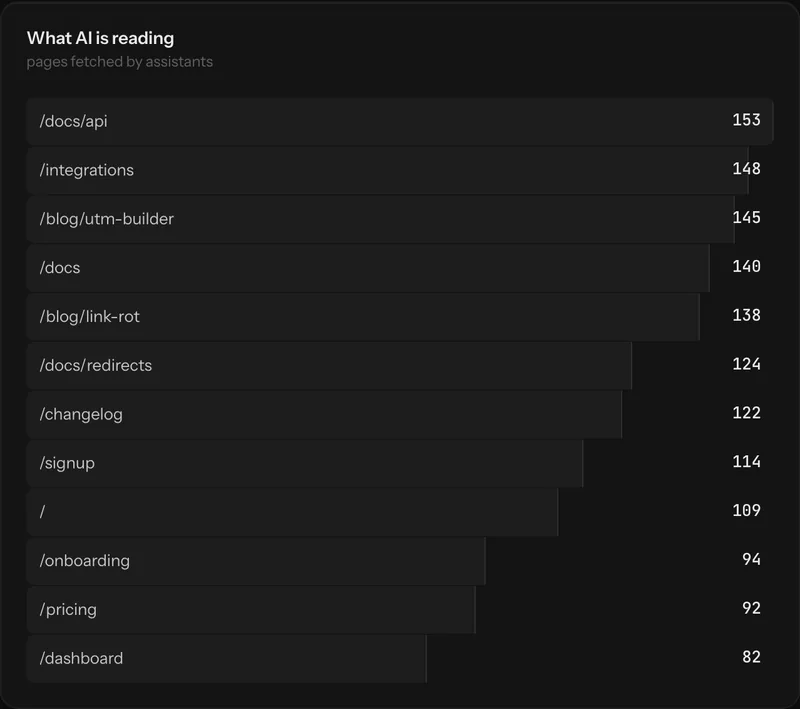
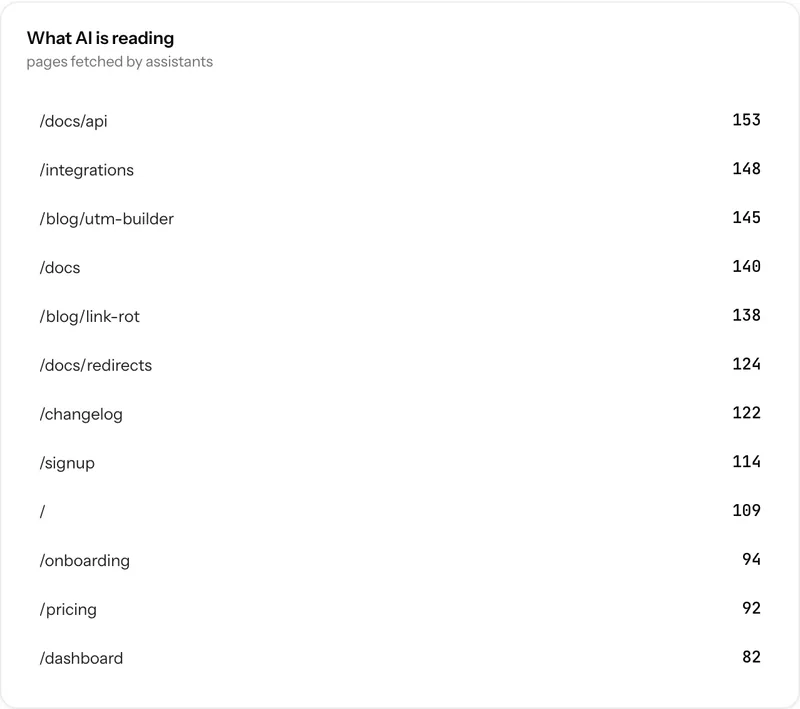
The pages they actually read
Which of your pages assistants fetch, ranked. This is the closest thing there is to a readership report for an audience that leaves no other trace, and it is often a very different list from your human top pages.
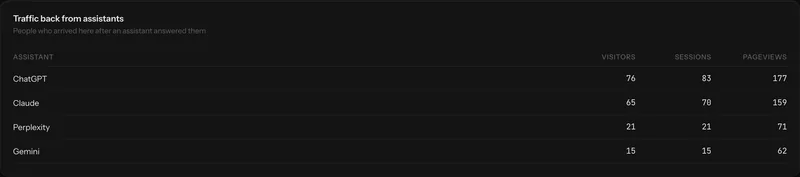
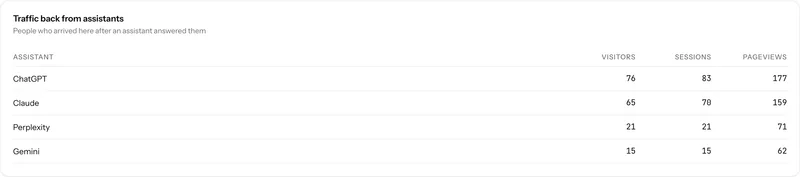
Referrals back, the figure that proves it worked
Visitors arriving from an assistant, as a channel of their own. The reading itself is invisible in every other report you have; this is the only number that shows the reading produced a reader.
An honest caveat, stated on the page itself
Identification comes from the user-agent string, which any client can set. This is a faithful record of the agents that identify themselves, and it says nothing about the ones that do not. Blocking an ingesting agent is also a real trade: it stops the corpus collection, and it stops the assistant describing your page accurately to the next person who asks.
How it works, precisely
- Signatures
- 25+ bot signatures, including AI crawlers, maintained in the collector
- Classification
- Answering (a person is waiting) versus ingesting (corpus collection)
- Filterable
- bot_name is an allow-listed dimension in the query layer
- Referral channel
- Assistants are classified as a distinct acquisition source
AI & crawlers: the usual questions
Do bots count in my visitor numbers?
No. Bot traffic is filtered out of the human-facing reports at collection and reported separately here, so your visitor counts are people and your crawler figures are complete.
Should I block AI crawlers in robots.txt?
That is a judgement this report exists to inform rather than make. The page shows the robots.txt token for each agent and states the trade plainly: blocking an ingesting agent stops it collecting your writing, and also degrades how accurately an assistant can describe your page to somebody who asks about it.
Next, most people read
Run it yourself this afternoon
Clone the repository, bring up the stack with Docker Compose, paste one script tag. The data never leaves your machines.